
7 New Solar Panel Technology Trends for 2026
GreenLancer has worked alongside thousands of solar contractors since 2013, observing these breakthroughs firsthand. These advances are making solar technology more powerful, affordable, and versatile, accelerating the adoption of solar energy technology across residential, commercial, and utility-scale projects. This article explores the latest solar panel technology trends shaping the future of clean energy.
Efficiency Breakthroughs in the Latest Solar Panel Technology
Solar panel efficiency has seen remarkable advancements over the past two to three decades. In the early days, solar panels had a conversion efficiency of around 10%, meaning they could only convert about a tenth of the sunlight they captured into usable electricity. However, solar panel efficiency rates have increased dramatically thanks to continuous solar research, development, and technological breakthroughs.
New World Record (Trina Solar 2025)
Relative to early 10% benchmarks
Today, the latest solar panel technology advancements have led to panels achieving conversion efficiencies of over 20%, with some even reaching 25%. This means that solar PV systems can now convert nearly a quarter of the sunlight they capture into clean, renewable energy.
In early 2025, Trina Solar set a new world record for solar conversion efficiency in n-type fully passivated heterojunction (HJT) solar modules, reaching 25.44%. This breakthrough highlights how the latest solar panel technology continues to push performance boundaries, helping reduce system size, cost per watt, and installation space, especially in high-demand or space-limited applications.
Higher efficiencies make solar energy a more viable and attractive option for homeowners, businesses, and entire cities, and reduce the space required for solar panels, allowing for greater electricity production from the same amount of sunlight.
Perovskite Solar Cells: The Most Promising New Technology
As the cost of solar panels has significantly decreased over the past few decades, finding ways to reduce solar panel manufacturing costs further has become increasingly challenging. Nearly all solar panels are made from silicon today. Thus, perovskite solar cells have emerged as a promising new technology due to their low production costs and high efficiency.
What Makes Perovskites Different
Perovskites are a family of semiconductor materials with a specific crystal structure, named after the mineral perovskite. They can absorb a wide spectrum of sunlight, including both visible and near-infrared wavelengths, making them exceptionally good at converting sunlight into electricity.
What sets this new solar technology apart is its simple, low-temperature manufacturing process. Unlike silicon, which requires energy-intensive purification and processing, perovskite solar cells can be fabricated using inexpensive materials and solution-based coating methods, offering a path toward high-volume, low-cost production.
The Promise of Tandem Solar Cell Designs
One of the most exciting innovations is the perovskite-silicon tandem solar cell. This hybrid design layers a perovskite cell on top of a conventional silicon cell, allowing each material to absorb different parts of the solar spectrum. Silicon captures long wavelengths, while perovskite captures shorter ones—together delivering much higher conversion efficiencies than silicon alone.
Recent Announcements in Perovskite Research
- LONGi Solar (Nov 2023): Announced its perovskite-silicon tandem solar cell hit an efficiency of 26.81%—a record-breaking milestone.
- University of Colorado Boulder: Developed a new method for manufacturing perovskite cells using a technique that improves uniformity and performance consistency.
As of early 2024, startups and major manufacturers around the world, including Oxford PV, Saule Technologies, and Tandem PV, are racing to commercialize these next-gen solar cells.
Remaining Challenges
Despite its promise, perovskite-based solar panel technology faces hurdles, primarily long-term stability (degradation when exposed to moisture and heat) and scalability. However, a major sign of progress came in 2025, when Japan announced a ¥227 billion ($1.5 billion USD) national investment to commercialize ultra-thin, flexible perovskite solar cells.
Bifacial Solar Panels: A Leading Technology in 2026
Bifacial solar panels provide a unique advantage by capturing sunlight from both the front and back of the module. This design allows them to utilize reflected sunlight from various surfaces, such as the ground, water, or nearby structures.
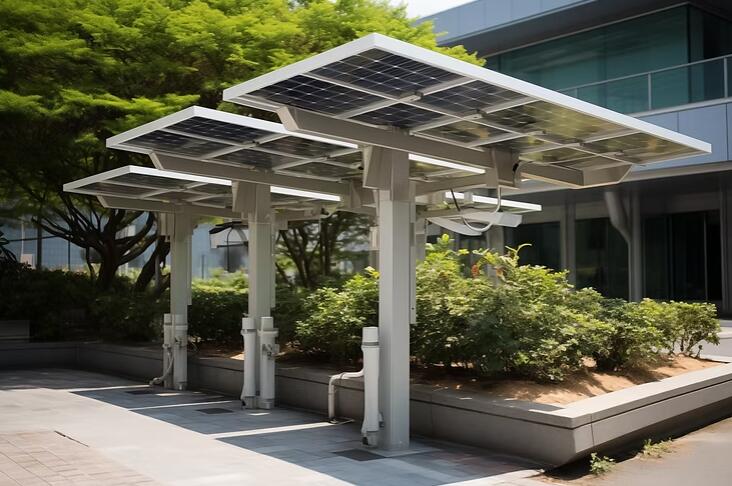
Bifacial modules capturing reflected light from the ground.
Recent advancements have significantly boosted their market share. Researchers at the National Renewable Energy Laboratory (NREL) are currently exploring the development of bifacial perovskite solar cells, further enhancing the potential of this cutting-edge technology.
Pros & Cons of Bifacial Technology
Although there are certainly advantages to using bifacial solar panels, there are also some drawbacks, primarily related to higher installation complexity and the requirement for specific ground albedo (reflectivity) to maximize gains.
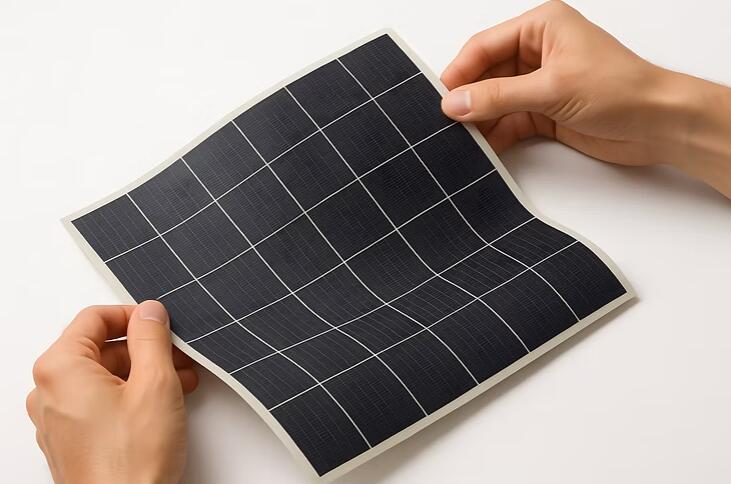
Flexible and Lightweight Solar Technology for New Uses
Ongoing innovations have led to the development of flexible and lightweight solar panels, leveraging cutting-edge materials like organic photovoltaics and ultra-thin silicon. MIT researchers recently unveiled ultralight fabric solar cells thinner than a human hair that can be laminated onto virtually any surface.
Per kilogram compared to glass panels
Lenovo Yoga Solar PC Concept (2025)
In 2025, Lenovo unveiled the Yoga Solar PC, a concept laptop equipped with 84 ultra-efficient solar cells built directly into the device. Lightweight solar sheets can be rolled up, shipped compactly, and deployed in minutes—no racking or heavy hardware required.
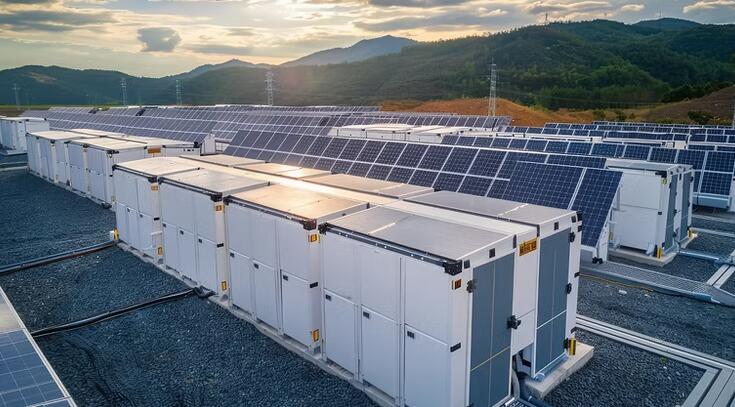
Energy Storage Systems Advancing Solar Technology
In 2025, the integration of energy storage systems with solar panels is expected to witness significant advances. Key focus areas include lithium-ion and flow batteries with higher energy density and longer lifespans. Advancements in battery management systems (BMS) provide better control and optimization, allowing users to maximize energy based on demand or time-of-use pricing.
Transparent Panels: The Latest Technology for Buildings
Transparent solar panels allow surfaces such as windows, facades, and skylights to double as energy-harvesting devices without sacrificing visibility. Researchers at NREL use transparent luminescent solar concentrators (TLSCs) to capture ultraviolet and near-infrared wavelengths while letting visible light pass through.
Smart Solar Panel Technology: AI & Sensor-Enabled PV Systems
The integration of sensors and Internet of Things (IoT) capabilities enables superior monitoring and optimization. Smart solar panels can adjust their orientation, track sunlight, and address solar energy production issues proactively using data analytics and automation.

U.S. Organizations Researching New Solar Technology
NREL is at the forefront, conducting studies in advanced PV materials and device design. Other national organizations include Sandia National Laboratories. Leading universities like Stanford, UC Berkeley, and MIT also have dedicated laboratories researching new materials and system designs.
Unlocking the Potential of New Solar Technology
As solar PV module technology evolves, renewable energy feasibility is rapidly increasing. Through enhanced efficiency, integration of smart technologies, and advancements in materials, solar power is becoming an essential part of the future of sustainable energy.
As the adoption of new solar panel technology accelerates, managing end-of-life solar modules is becoming increasingly important. In 2025, the Surya Arka project in India piloted a solar recycling initiative that repurposes used panels into energy-efficient tools for agriculture, highlighting circular economy principles.
This project reflects a growing global focus on sustainability in new solar technology, ensuring that solar solutions remain environmentally responsible across their full lifecycle.
Post time: Jan-30-2026